On short rides, communication gear feels like a nice extra—something you might use for music or the occasional call.
But once you’re deep into a long-distance ride, it becomes something else entirely. Navigation prompts, group coordination, weather updates, even simple check-ins with riding partners start to matter more than you expect.
And that’s usually when riders run into a decision point: go with an integrated Bluetooth helmet system, or use a separate communication unit that attaches externally.
At first glance, they seem similar. Both connect you to your phone, your group, and your navigation. But over time, they create very different riding experiences—especially when you’re wearing the helmet for hours at a stretch.
Why Communication Gear Feels Different on Touring Rides
The difference between these two systems becomes more noticeable the longer you ride, not because of features, but because of friction.
On paper, both systems do the same job. In practice, they affect how often you interact with your helmet, how you manage battery life, and how reliable your setup feels over long distances.
A few reasons this becomes important on touring rides:
• Riding fatigue makes small interface differences feel bigger over time
• Weather exposure affects how external components hold up during multi-day trips
• Group riding requires consistent connectivity, not occasional pairing success
• Battery management becomes part of daily routine on longer journeys
• Helmets get handled more often, increasing wear on controls and mounts
This is where riders start to notice that communication gear isn’t just about sound—it’s about consistency and ease of use over days of riding.
How Riders Experience Integrated Helmet Systems
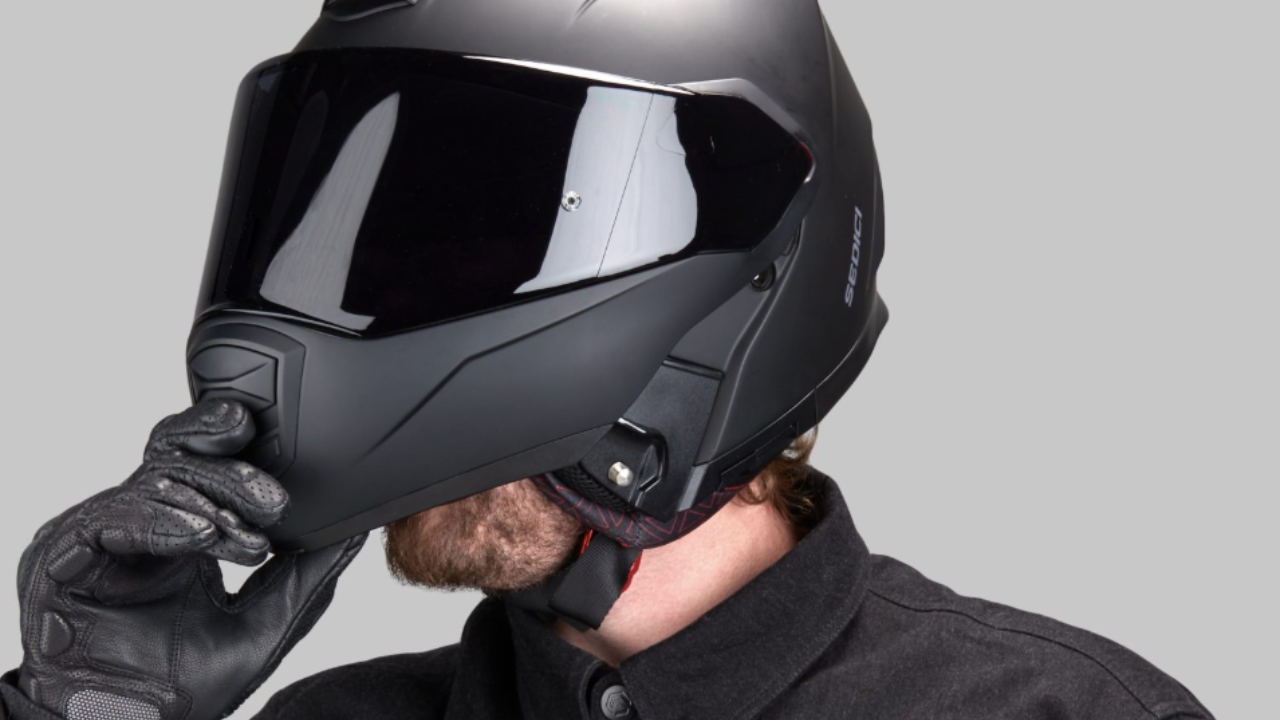
Bluetooth-integrated helmets are designed with communication built directly into the shell or liner. On the surface, this feels clean and simple.
For many riders, the appeal is immediate: nothing to install, nothing sticking out, and everything feels like it belongs together.
On long rides, that simplicity becomes the main advantage. There’s less setup, fewer external parts, and usually a more streamlined feel in wind and weather.
But the experience isn’t just about aesthetics—it’s about routine.
Riders often describe integrated systems as “set and forget.” Once paired, they tend to stay in place and require less day-to-day adjustment.
The trade-off shows up in flexibility. If something fails or underperforms, you’re dealing with the helmet system as a whole rather than a replaceable unit.
How Riders Experience Separate Communication Units
Separate communication units are the more traditional approach—clip-on or mountable systems that attach to the outside of the helmet.
At first, they feel more “technical,” but over time, many riders appreciate the flexibility they offer.
If a unit wears out, you replace just that component. If newer technology comes out, you upgrade without changing your helmet. And if you switch helmets between seasons or types of riding, the system comes with you.
On longer tours, that adaptability becomes a real advantage.
However, external units introduce more physical interaction with the helmet itself. Buttons, mounts, and speakers are separate pieces, and that means more things to check, adjust, or secure before a ride.
Some riders love that control. Others prefer not to think about it at all once they’re on the road.
What Actually Influences Rider Preference
Over time, preferences tend to form around lifestyle rather than specifications.
Riders who prioritize simplicity often lean toward integrated systems because they reduce setup time and eliminate external clutter.
Riders who value upgradeability and flexibility often prefer separate units because they can evolve their setup without replacing their helmet.
There’s also a strong influence from riding style:
• Solo touring riders often prefer simpler integrated setups
• Group riders often prioritize battery life and upgrade flexibility
• Long-haul highway riders value consistency over feature variety
• Adventure and mixed-terrain riders often prefer modular systems they can repair or replace easily
What starts as a technical comparison usually becomes a question of how much control you want over your setup.
Gear Ecosystem and Real-World Touring Setups
Communication systems don’t exist in isolation—they’re part of a wider touring setup that includes helmets, luggage, power systems, and weather gear.
Common supporting categories include:
• Motorcycle communication systems like Cardo Systems, widely used for group touring and navigation audio
• Touring luggage systems such as those from Viking Bags that help organize charging cables, backup batteries, and accessories
• Helmet and gear integration accessories supported by distributors like Twisted Throttle
• Power management systems and charging solutions from brands like Projecta for keeping devices running on long trips
• Maintenance and durability products from Muc-Off that help protect external mounting systems from weather and wear
On longer tours, communication gear becomes part of a larger system of reliability, not just a standalone feature.
What Experienced Riders Learn After Thousands of Kilometres
Most riders who’ve done serious touring eventually stop debating specs and start thinking about reliability in motion.
Integrated systems feel cleaner and simpler, especially when everything works as expected. There’s less setup, fewer loose parts, and fewer decisions before each ride.
Separate systems feel more adaptable. Riders appreciate being able to upgrade, replace, or fine-tune their setup without changing helmets.
One of the most common realizations is that communication gear becomes most valuable when it stops drawing attention. If you’re constantly thinking about pairing, battery life, or mounting, the system is adding friction instead of removing it.
Experienced riders often settle into one core principle: whichever system you stop noticing first is usually the right one for your style of riding.
Frequently Asked Questions
Are integrated Bluetooth helmets better for touring?
They can be more convenient and streamlined, but they offer less flexibility for upgrades or replacements.
Are separate communication units more reliable?
They’re often easier to repair or replace individually, which can improve long-term reliability for some riders.
Which system has better sound quality?
Both can perform well depending on brand and installation quality. Fit and speaker placement matter more than system type.
Can I upgrade integrated systems?
Usually not in the same way as external units. Upgrades typically require replacing the entire helmet or system.
What do most touring riders prefer?
It varies, but many long-distance riders lean toward separate units for flexibility, while casual tourers often prefer integrated systems for simplicity.