Introduction
Long-distance motorcycle touring changes the way riding works. On short rides, mistakes are often minor and recoverable. On long tours, however, small errors can accumulate — fatigue builds, attention drifts, and unexpected hazards become more dangerous simply because exposure time is longer.
Defensive riding is not about riding cautiously in a restrictive way. It’s about staying ahead of risk so that decisions are made early, not reactively. For touring riders covering hours of road each day, this mindset becomes one of the most important safety tools available.
The goal is simple: reduce surprises.
Why Defensive Riding Matters More on Long Tours
On extended rides, several factors increase risk:
- Fatigue reduces reaction speed
- Mental focus fluctuates over time
- Road conditions change across regions
- Weather shifts during the ride
- Traffic patterns become less predictable
Unlike commuting, where routes are familiar, touring often means riding in unfamiliar environments for long periods. That unfamiliarity increases cognitive load.
Defensive riding helps compensate for that by building a buffer between the rider and potential hazards.
Core Principles of Defensive Motorcycle Riding
1. Assume you are not seen
One of the most important defensive habits is assuming that other road users do not see you clearly.
Cars may:
- Misjudge distance
- Fail to check blind spots
- Turn across your path
- Change lanes without signaling properly
This is not pessimism — it’s risk awareness.
2. Maintain space at all times
Space equals time. Time equals safety.
Touring riders should aim to maintain:
- A larger following distance than urban riding
- Escape routes on either side of the lane when possible
- Buffer zones around blind intersections
Space gives you options when something unexpected happens.
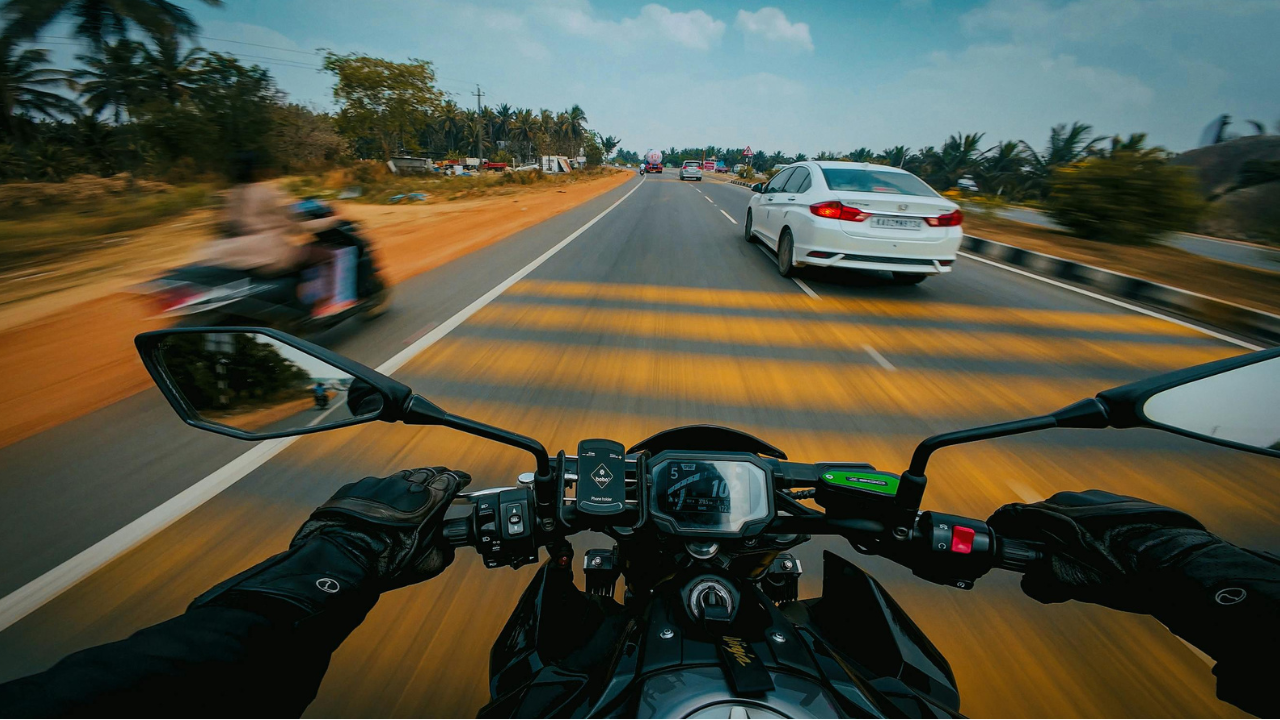
3. Ride with constant scanning, not fixed focus
Defensive riding relies on continuous scanning:
- Far ahead for road changes
- Mid-distance for vehicle behavior
- Immediate area for surface hazards
This prevents tunnel vision, which is common during long rides.
Hazard Anticipation in Touring Conditions
Experienced touring riders don’t just react to hazards — they predict them.
Common predictive cues include:
- Brake lights far ahead indicating congestion
- Slight weaving from drivers indicating distraction
- Road color changes indicating moisture or debris
- Headlight patterns indicating oncoming traffic flow
Anticipation reduces the need for sudden reactions.
Managing Speed for Safety, Not Just Conditions
Speed in defensive riding is not just about limits — it’s about control.
Key principles:
- Match speed to visibility distance
- Reduce speed before entering unknown roads
- Adjust speed for fatigue levels, not just traffic
- Slow down early in changing weather or terrain
A slightly slower pace often creates significantly more decision time.
Lane Positioning Strategy
Lane positioning is one of the most underused defensive tools.
Riders can adjust position to:
- Improve visibility around vehicles ahead
- Avoid oil or debris in wheel tracks
- Increase visibility to other drivers
- Create buffer space from traffic lanes
The goal is not to “claim space” but to optimize safety visibility.
Fatigue Awareness as a Defensive Tool
Fatigue is one of the most underestimated risks in motorcycle touring.
Signs include:
- Delayed reaction to small changes
- Reduced attention to mirrors
- Mental drifting or zoning out
- Tension in shoulders or grip
Defensive riding includes recognizing when performance drops — and responding early, not late.
Breaks are not optional in long-distance touring; they are part of the safety system.
Gear That Supports Defensive Riding
Visibility enhancement systems
Lighting systems from DENALI Electronics help increase visibility in traffic and low-light conditions, improving how other drivers perceive the motorcycle.
Communication tools for awareness
Communication systems from Cardo Systems allow riders to stay coordinated in group touring, reducing confusion and improving situational awareness.
Touring gear for fatigue reduction
Comfort-focused riding gear from Alpinestars helps reduce physical strain, which indirectly supports better decision-making over long rides.
Real-World Defensive Riding Scenario
A touring rider on a multi-day trip approaches a busy highway interchange.
Without defensive riding:
- Rider maintains constant speed
- Focus remains fixed ahead
- No buffer for unexpected lane changes
With defensive riding:
- Speed is slightly reduced before entering congestion
- Lane position is adjusted for visibility
- Following distance is increased
- Escape routes are mentally identified
When a vehicle suddenly merges without signaling, the rider has space and time to adjust smoothly rather than react sharply.
Common Mistakes Riders Make
- Riding too close to vehicles ahead
- Fixating on one point instead of scanning
- Ignoring early signs of driver unpredictability
- Maintaining speed in unfamiliar areas
- Delaying breaks until fatigue becomes obvious
- Overconfidence on familiar-looking roads
Most touring incidents are not caused by single dramatic errors — but by small lapses in awareness.
Frequently Asked Questions
Is defensive riding only for beginners?
No. It is most important for experienced riders on long-distance tours because fatigue increases risk exposure.
Does defensive riding mean riding slower?
Not necessarily. It means riding more strategically, adjusting speed based on conditions rather than habit.
What is the most important defensive habit?
Maintaining space and constantly scanning the environment.
Can defensive riding reduce fatigue?
Yes. Reducing surprise events lowers mental stress and improves endurance over long rides.
Conclusion
Defensive riding is the foundation of safe motorcycle touring. It is not a style of riding defined by caution, but by awareness, anticipation, and control.
On long-distance rides, conditions constantly change — traffic, weather, terrain, and rider fatigue all interact. Defensive riding helps manage that complexity by ensuring decisions are made early rather than under pressure.
The result is not just safer riding, but more consistent, confident, and sustainable touring over long distances.