Introduction
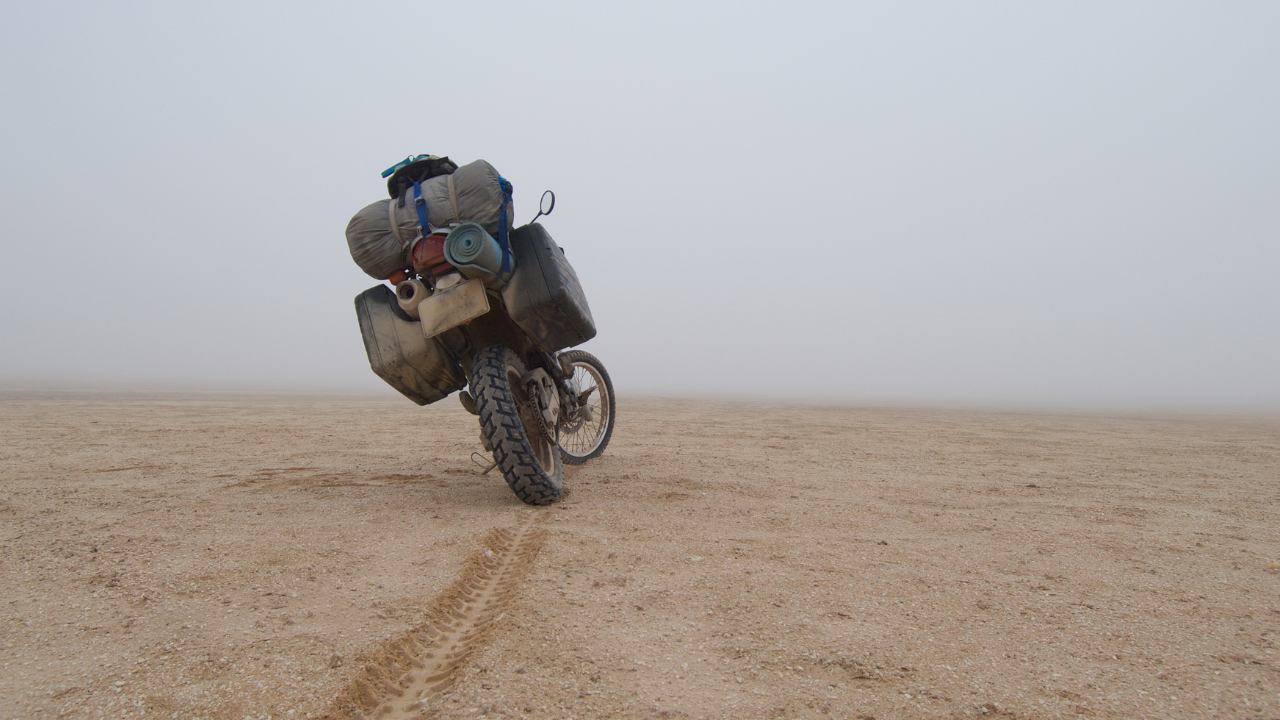
Fog and mist change motorcycle touring in a way that feels almost immediate. One moment the road is clear and open, and the next, visibility shrinks to a few meters. Unlike rain or wind, fog doesn’t always feel physically intense — but it creates one of the highest-risk environments for riders because it reduces reaction time and compresses the entire riding world into a narrow field of view.
For long-distance touring riders, fog is especially challenging because it often appears in transitions: valleys, coastal routes, early mornings, and mountain descents. These are exactly the kinds of roads where riders naturally want to maintain rhythm, which makes adjustment even more important.
The goal in fog riding is not speed or efficiency — it is control, awareness, and consistency.
Why Fog Is So Dangerous for Motorcyclists
Fog affects riding in several overlapping ways:
- Reduced depth perception
- Limited forward visibility
- Distorted perception of distance and speed
- Hidden hazards (debris, vehicles, animals)
- Delayed reaction time due to surprise obstacles
Unlike rain, fog doesn’t always give visual cues about severity. It can thicken suddenly within a few hundred meters.
Motorcycles are more exposed than cars, so riders don’t benefit from windshield wipers, enclosed lighting diffusion, or cabin lighting systems. Everything depends on external visibility and rider judgment.
How Fog Changes Riding Perception
One of the most important challenges in fog is how it affects judgment.
Riders often experience:
- Overestimating speed due to lack of visual reference
- Underestimating distance to vehicles ahead
- Difficulty reading road curvature early
- Increased tension and gripping on handlebars
- Mental fatigue from constant scanning
This makes fog riding more mentally demanding than physically demanding.
Safe Riding Techniques in Fog and Mist
1. Reduce speed without hesitation
Speed control is the most important adjustment. The goal is not to ride slow for its own sake, but to match stopping distance to visibility distance.
If you can only see 50 meters ahead, your speed must reflect that limitation.
2. Increase following distance
In fog, tailgating becomes especially dangerous because brake lights may be the first visible warning of a hazard. Increasing space allows more reaction time.
3. Use lane positioning strategically
Riders often shift slightly within the lane to improve visibility of road edges or to avoid spray from vehicles ahead. This must be done gradually and predictably.
4. Avoid sudden movements
Fog reduces visual cues for other drivers as well. Smooth inputs in braking, acceleration, and steering reduce risk of being misread by traffic.
Visibility and Lighting Considerations
Lighting becomes critical in fog conditions because visibility is two-way — you need to see and be seen.
Auxiliary lighting systems from Denali Electronics are commonly used by touring riders to improve visibility in low-light and fog-heavy environments.
Proper lighting helps:
- Increase detection distance
- Improve contrast in white-out conditions
- Make the motorcycle more visible to cars and trucks
However, overly bright or poorly angled lights can reflect back in fog and reduce visibility, so setup matters.
Gear That Helps in Fog Riding
Communication systems
In group touring, fog can separate riders visually even at short distances. Communication systems from Cardo Systems help maintain coordination when visual contact is reduced.
Weather-resistant touring gear
Fog often comes with moisture and cooler air. Layered gear systems from Alpinestars help riders adapt to shifting temperature and damp conditions without stopping frequently.
Luggage protection
Moisture exposure is common in fog-heavy environments, especially on multi-day tours. Luggage systems from Viking Bags help keep essential items dry and protected.
Mental Fatigue in Low Visibility Riding
Fog creates a specific type of mental load:
- Constant scanning for hazards
- Reduced confidence in road predictions
- Higher tension in posture
- Increased focus drain over time
The key issue is not intensity but duration. Even moderate fog over long distances can cause significant fatigue accumulation.
Riders often need to consciously relax their grip, slow their breathing, and avoid over-focusing on the immediate road surface.
Real-World Fog Riding Scenario
Imagine a morning touring route through coastal hills.
Early stage:
- Light mist in the air
- Slight reduction in clarity
- Riding feels normal but muted
Mid-stage:
- Visibility drops quickly
- Vehicles appear suddenly from fog
- Road edges become harder to define
Extended exposure:
- Mental fatigue builds
- Rider becomes more cautious and slower
- Focus shifts entirely to immediate road space
With proper preparation:
- Speed is adjusted early
- Lighting improves visibility range
- Rider maintains steady, relaxed control
- Fatigue is managed through breaks and awareness
The ride remains controlled instead of stressful.
Common Mistakes Riders Make in Fog
- Continuing normal highway speeds
- Following vehicles too closely
- Overusing high beams in dense fog
- Tensing upper body due to stress
- Ignoring early signs of fatigue
- Relying on visual cues that are no longer reliable
Most fog-related risks come from delayed adaptation rather than the fog itself.
Frequently Asked Questions
Is it safe to ride motorcycles in fog?
Yes, but only if speed, spacing, and visibility strategies are adjusted appropriately.
Should I use high beams in fog?
Usually no. High beams can reflect off fog particles and reduce visibility.
What is the biggest danger in fog riding?
Reduced reaction time due to limited visibility and hidden hazards.
How do I reduce fatigue in fog conditions?
By reducing speed early, staying relaxed on controls, and taking breaks before mental fatigue builds.
Conclusion
Fog and mist create one of the most mentally demanding conditions in motorcycle touring because they reduce visibility without warning and compress reaction time. The key to safe riding is not complexity, but consistency — steady speed, increased spacing, proper lighting, and controlled rider input.
When managed correctly, fog becomes another environmental condition to adapt to rather than a barrier to touring progress.