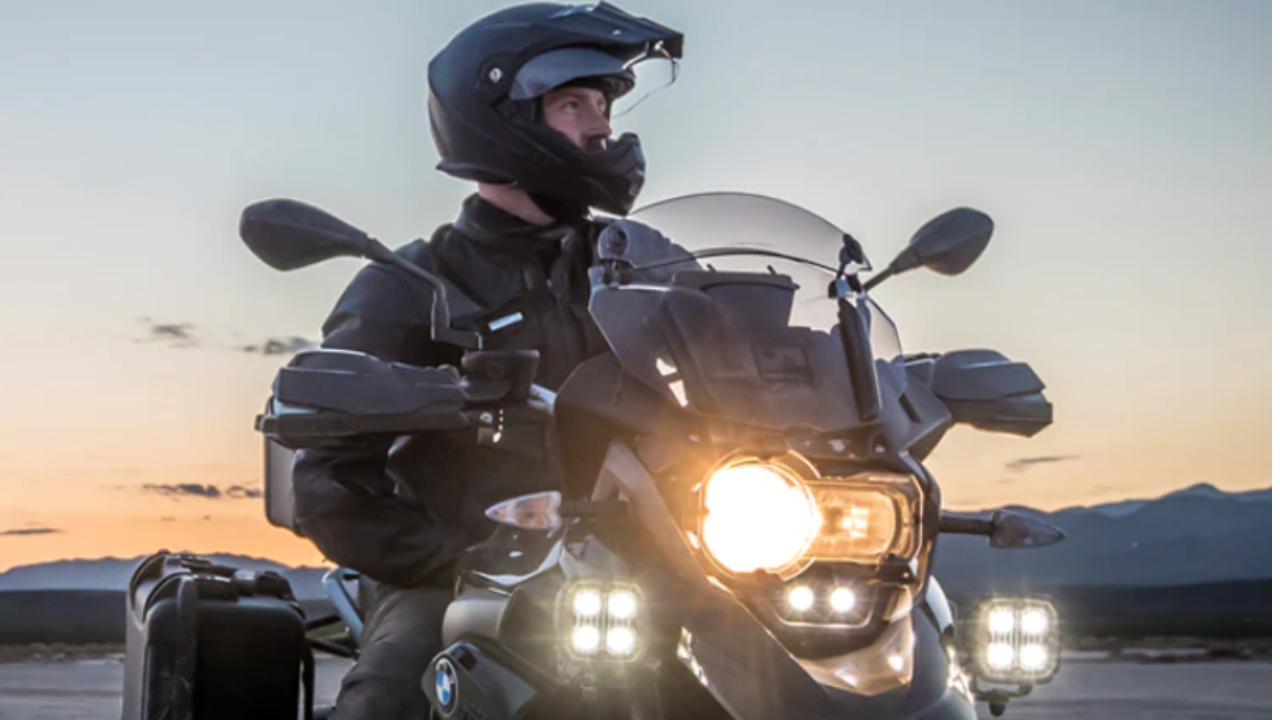
Night riding has a way of changing how a motorcycle feels.
A road that seemed familiar during the day suddenly becomes harder to read. Shadows stretch longer than expected. Reflective signs show up late. And even if your stock headlights are technically “working fine,” you start realizing how much you’re relying on them just to feel confident.
That’s usually when riders start thinking about LED auxiliary lights.
Not as an upgrade for looks—but as a way to regain clarity, distance, and reaction time when riding after dark or through poor weather.
And the real question becomes simple: are stock headlights enough, or do auxiliary LEDs actually change the experience in a meaningful way?
Why Stock Lighting Starts to Feel Limited on Real Roads
Stock motorcycle headlights are designed to meet regulations, not necessarily to maximize visibility in all conditions.
On paper, they do the job. But on long-distance or touring rides, several limitations start to show up:
• Narrow beam focus – Stock lights often concentrate directly ahead, leaving edges and periphery dim
• Limited distance projection – At highway speeds, riders can outpace their visibility range
• Poor side illumination – Animals, road debris, and curves are harder to read in advance
• Weather interference – Rain, fog, and dust scatter stock light more easily
• Fatigue under low visibility – Straining to see reduces reaction time over long rides
What feels “acceptable” in city riding often becomes restrictive once speeds increase and roads become less predictable.
That’s where auxiliary lighting starts to matter—not as extra brightness, but as expanded awareness.
How Riders Actually Experience LED Auxiliary Lights
LED auxiliary lights change the shape of what you see, not just the intensity.
Instead of a single forward beam, you get a wider and more controlled spread of light that fills in the gaps stock headlights leave behind.
On long rides, this creates a different kind of confidence. You’re not just seeing farther—you’re seeing more of what’s happening around the road itself.
But the experience isn’t only about brightness. It’s about reducing mental effort.
Riders often describe the difference as “less guessing.” Corners feel more readable. Road edges are clearer. And obstacles appear earlier in your decision-making window.
That reduction in visual strain becomes especially noticeable after hours of riding in the dark.
Where Stock Headlights Still Hold Their Ground
Stock headlights aren’t useless or outdated—they’re simply limited by design constraints.
They still offer advantages that riders shouldn’t ignore:
• Simple, maintenance-free operation – No wiring complexity or mounting adjustments
• Factory integration – Designed to work with the bike’s electrical system without modification
• Regulatory compliance – Fully legal in all riding conditions without extra setup
• Predictable beam pattern – Consistent output without aiming or tuning
• Lower upfront cost – No additional investment required
For many riders who rarely ride at night or stick to well-lit roads, stock lighting is often enough.
The limitation shows up when riding becomes longer, faster, or more remote.
How Riders Decide Whether the Upgrade Is Worth It
The decision to add auxiliary lights usually comes down to riding environment rather than preference.
Common patterns include:
• Touring riders on rural or unlit highways
Auxiliary lights become almost essential for reading distance and spotting hazards early.
• City riders or short-distance commuters
Stock headlights are often sufficient due to street lighting and lower speeds.
• Adventure riders on mixed terrain
Auxiliary lighting helps with trail visibility, side coverage, and obstacle detection.
• Night-heavy riders or long-distance tourers
The upgrade is often viewed as a fatigue-reduction tool more than a visibility boost.
• Weather-exposed riders
Fog, rain, and dust conditions make wider, lower auxiliary beams more valuable than brighter stock lighting.
Gear and Lighting Systems That Support Night Touring
Lighting upgrades rarely work in isolation—they’re part of a wider visibility and touring setup.
Useful categories include:
• LED auxiliary lighting systems – Forward-facing and wide-beam setups designed for motorcycles
• Motorcycle lighting brands and upgrades – Systems like DENALI Electronics known for touring and adventure visibility solutions
• Mounting and integration systems – Hardware and support accessories from distributors like Twisted Throttle
• Touring luggage systems for electrical gear – Brands such as Viking Bags help organize wiring, switches, and accessories during long trips
• Maintenance and durability products – Care solutions from Muc-Off help protect wiring and housing from weather exposure
• Power management systems – Electrical support tools like those from Projecta ensure stable output for auxiliary systems
Lighting upgrades are most effective when they’re integrated cleanly into the bike’s broader touring setup.
What Experienced Riders Learn After Night Miles Add Up
Most riders who spend significant time riding at night eventually reach a similar conclusion: stock headlights are fine until conditions stop being predictable.
Once you’re riding in unfamiliar areas, poor weather, or high-speed rural roads, visibility becomes less about “seeing light” and more about understanding the road ahead quickly enough to react.
Auxiliary lights don’t just increase brightness—they reduce hesitation. That small change can make long night rides feel less mentally draining.
At the same time, experienced riders also learn that more light isn’t always better. Poorly aimed or overly aggressive lighting can create glare, reduce contrast, and actually make night riding more tiring.
The best setups tend to be controlled, wide, and intentional—not just bright.
Common Questions Riders Ask
Are LED auxiliary lights legal on motorcycles?
In most regions, yes, as long as they are properly mounted and aimed and used within road regulations.
Do auxiliary lights drain the battery?
They do draw additional power, but modern LED systems are efficient and typically manageable on touring motorcycles.
Can I rely only on auxiliary lights instead of stock headlights?
No. They are designed to complement, not replace, factory lighting.
Are auxiliary lights worth it for city riding?
Usually not necessary unless you frequently ride in very dark or poorly lit conditions.
What matters more—brightness or beam pattern?
Beam pattern is often more important. A well-shaped beam improves visibility more than raw brightness alone.